That’s not a typo; this isn’t about Chris DeGarmo’s or Jim Matheos’ killer riffs. It’s about this:
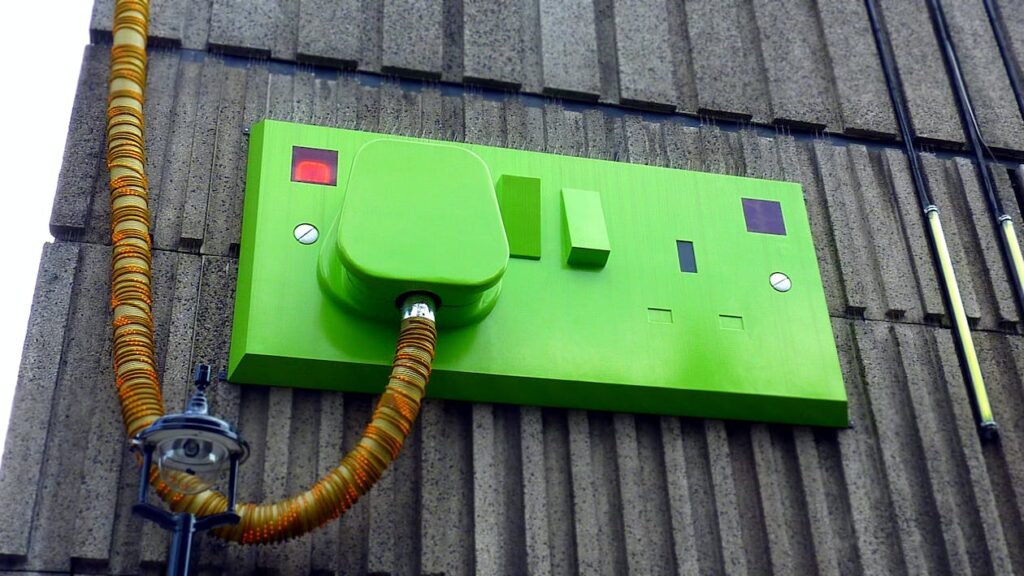
Why are they badass? It’s in the name. Plug it into the wall, pop the other end into your device of choice and watch tamed lightning surge into a boxed-in chemical reaction that lets you do anything, whether it’s cool yourself off with a refreshing breeze or immerse yourself into a virtual world.
I’m serious. I look at my phone charger cable—triple ended, with Mini, Micro and USB-C plugs—and just imagine how cool it would look if my MP3 player, my battery bank and phone were charging at once. Drawing power from the walls, itself from the wires, itself from the huge plant a few miles away and diverting a small portion of that current into cool tech. It’s like watching paint dry, but the end result isn’t a pretty wall. It’s whatever you want, plugged in at the other end.
Even in media, it’s cool to power up:
And all that’s (more or less) happening behind these layers of insulation, through thin metal strands hidden inside. It’s harnessing one of the primeval forces of nature for our own ends, to such an extent that it’s mundane. Franklin confirmed lightning’s electric nature in 1752. Faraday became our modern Prometheus the day he completed his experiment in 1821, turning the electric into the kinetic. Westinghouse championed the method of transmitting electricity across vast distances, a method still used today. That’s the legacy of discovery and progress called upon every time we light up our wires and fuel our devices. In the words of a very unwise man, “This is power.”
