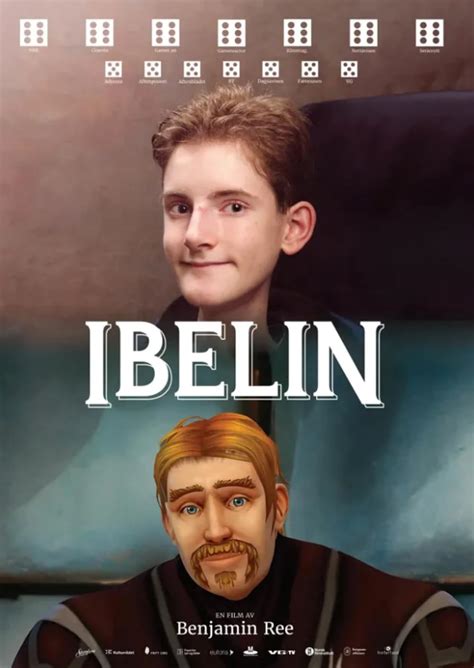
I knew I’d appreciate this documentary the moment I heard about it. A film about digital and physical lives intertwining? It’s a shoe-in for me. However, I didn’t expect it to be so sincere, so thoughtful about every aspect of the subject matter. Not at all.
A quick overview: Ibelin is the name of the character created by Mats Steen, the principal subject of the documentary. Steen was born with Duchenne, a degenerative muscular condition that as of now is both incurable and ultimately, fatal. Video games became an outlet for Steen, who was confined to a wheelchair relatively early on in his life. World of Warcraft in particular was one of his largest outlets, as it’s a game where one can do more or less anything they might do in real life: explore, work, socialize, anything that comes to mind. This can be taken even further by engaging in roleplaying, which as mentioned and portrayed in the documentary is where you take on a full-fledged character and act out their lives within the game’s setting. It’s a lot like acting, albeit with you puppeting the actor physically, and it’s almost always written out in in-game chat.
Mats as Ibelin made friends, found love, and connected on a deep, human level with many people during his time in Azeroth. But he also made mistakes, mistakes that hurt people. He went into dark places mentally, and felt burdened by his condition in the physical world. I noticed a point where the members of Starlight, the community he was a part of, met up in-person for the first time. They had invited him and given him several opportunities to participate, but he chose not to. He felt like they’d only see him as a sick person, not as who he truly was. That was the root cause of the mistakes he later made, and it was just so refreshing to see a story this complex and truly human presented without judgment, bias or mockery.
For those unfamiliar with digital communities, it can feel rather silly. A bunch of people staring at screens for hours, making their avatars do mundane things and acting out lives that will never cross over into the physical world. But the feelings are real, the emotions no less fictional than the history of our lives in this reality. That’s why I’m careful to say ‘the physical world’ instead of ‘the real world.’ We are our emotions and personalities as much as we are our flesh and blood, and though the latter cannot enter the digital world, the former can as easily as we might step through a doorway.
I’ve long thought that video games’ true potential lie in their ability to help people connect. Indirectly perhaps, through shared interest of titles—and directly, in the case of multiplayer games that allow players to interact. In my youth I thought that video games could replace the physical world, but at the time I was very much seeking to escape from the troubles I was going through. Don’t get me wrong, I still do that. Everyone has their own pieces of escapism. I don’t do it as often though, and I don’t try to ignore who I am in the physical world. As someone who both plays World of Warcraft and roleplays within it, I try to put a little piece of myself into my characters, and if I speak out-of-character then I always do so with my personal feelings and thoughts. I want to live in Azeroth, but I also want to step out of that world and back into this one. They’re both inexorable parts of me, and I think back to adventures taken to the depths of Stratholme and the furthest reaches of Outland with the same fondness that I recall the first time I flew on a plane, or left my home country for the first time.
I just never thought that I’d see a production like this documentary touch on this topic with such care. It’s not that it’s uncompromising, but it doesn’t gloss over the highs and lows of Mats’ life as Ibelin. He lived a human life—with success and failure, and in the end he was able to I believe find some measure of peace with his two worlds. He opened up to his friends in Starlight about who the person behind Ibelin was. He connected his two lives.
It wasn’t until several years ago that I had met a community like Starlight myself, and the impact it’s had on me has been no less pronounced. I’ve become kinder, more thoughtful, and more sociable in general. More comfortable with myself, and eager to learn more about my friends as they learn about me. It’s the kind of social life I honestly never thought I’d have, and still at times question if I even deserve. We all have our inner demons. Sometimes they get a foothold above the depths where they belong, but it’s knowing that out there, across the country and greater world beyond there’s people that care about me, it’s that knowledge that helps me keep my head above water.
In this day and age, where the internet at large is increasingly surface-level, all-encompassing yet colder than ever, I hope people watch this documentary. I hope they understand that there’s still ways to harness the connective power of the internet to meet and understand people, and to embrace the earnest sincerity that it presents. Mats/Ibelin and the rest of Starlight formed real bonds that persisted through both realities, and the impact that he had on the world even before this documentary was truly remarkable.
