Heads up: There’s spoilers for a first playthrough all throughout this post. NOT for subsequent ones.
When I first heard about this game, I figured it’d be a neat game in the same vein as No Man’s Sky. Fun for exploration, maybe for flying a mishmashed combination of a space shuttle and the International Space Station. Towards release, I got more interested—but I held off, mostly because I’ve seen too many release flops. On September 14th I started playing Starfield. I now have over 170 hours in it as of this post’s publishing.
I’ve taken pains to keep a normal routine as much as I can, amid my tide of obsession with this game. I make sure to go in another room and watch the nightly news, and spend time cooking a proper meal before I abscond to my captain’s quarters and blow hundreds of thousands of hard-earned credits on new and exciting ship builds.
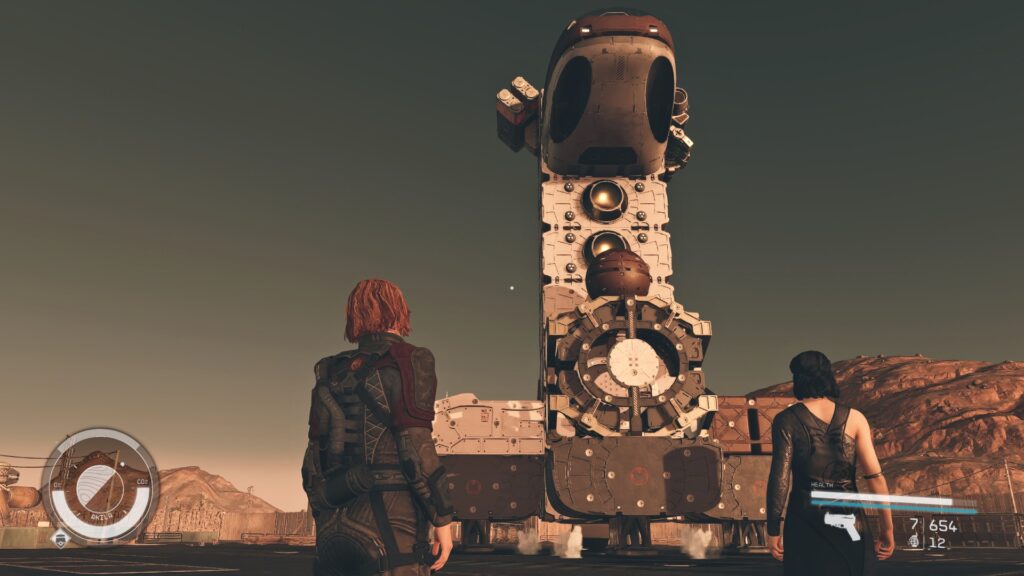
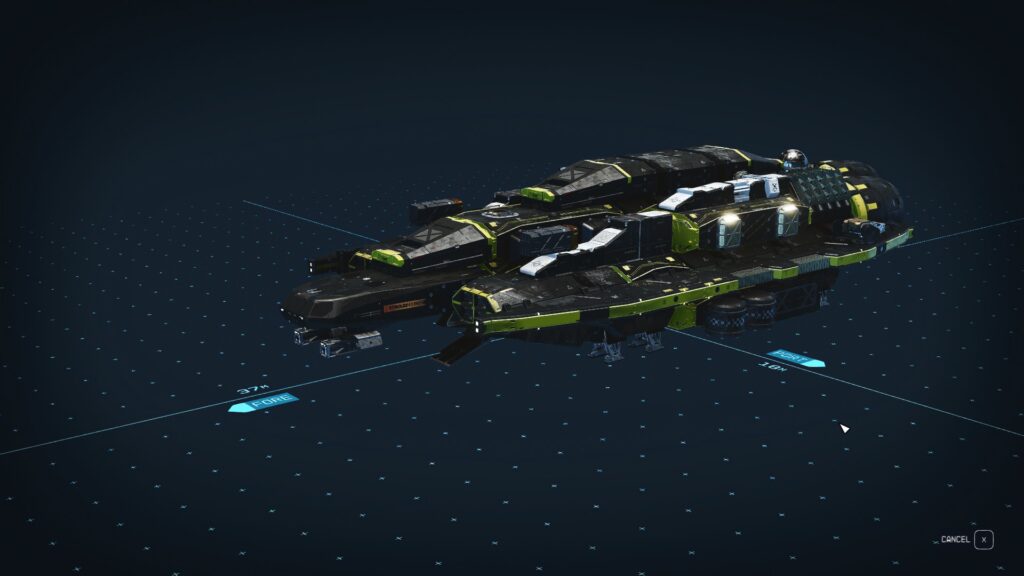
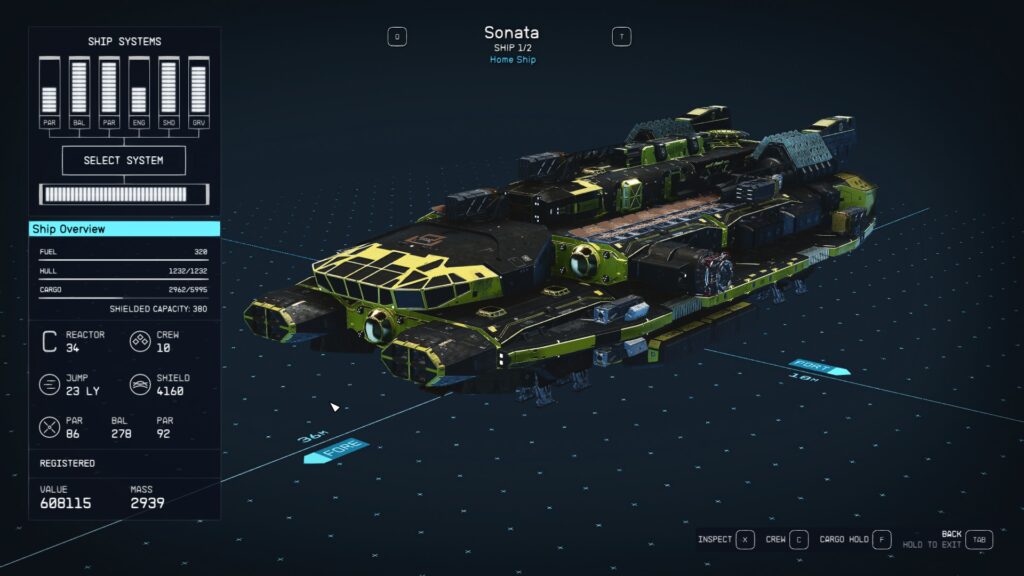
That’s the first major ‘fuck yes’ moment I had: realizing I can just slap together whatever type of ship I want, within the confines of the art style recently christened ‘NASApunk.’ So far I’ve built my attempt at a Hork-Bajir starship from the Animorphs series, contemplated how I’d make the Bebop, and used the layout of the SSV Normandy SR1 as a guidepost for how I build my ship’s livable interior. In the end, I settled on a big brick I called the Sonata, painted sleek black with hazard yellow finishes. Over time, it grew from a functional hauler to a mobile base for Constellation, the explorer’s organization associated with Starfield’s main quest.
I also engaged in a spot of smuggling, some good old-fashioned bounty hunting, and a brief stint as a double agent within the notorious pirate gang the Crimson Fleet, and UC SysDef, the first line of defense for the central authority of humanity, the United Colonies. But in a first for a Bethesda game, the main quest took the grand prize. Featuring thoughtful, if surface-level forays into the philosophy of the divine, the nature of God in an increasingly secular society, and one of the few examples of a multiverse in fiction that, in my opinion, isn’t a tiresome exercise solely to justify crossovers and the elimination of risk. The notion of ‘person dies, multiverse person shows up’ is subverted in fact, as the ‘replacement’ for a lost ally is far from the person they were in your universe. Indeed, when the main quest is complete and you’re faced with the choice of remaining in your universe or embracing the multiverse, I hesitated—because while it was an explorer’s dream come true, the humanist within me felt like I’d be cutting myself off from something I could never regain. It’s a theme echoed several times in Starfield: losing your roots, but gaining so much more. It’s up to the player to decide if the cost was worth it.
Starfield is also one of the few games that brought me to genuine tears, which I certainly wasn’t expecting. When it comes to movies, it’s far easier for me to get misty-eyed, but for some reason games don’t do that for me often. Mid-way through the main story, you’re faced with a choice: stay at Constellation’s base, the Lodge and defend it—or go to their space station, the Eye, in orbit and save everyone who was attacked up there. It seems an easy choice, if not for the fact you know that same attacker is coming to the Lodge. I chose cross my fingers that the Lodge could endure, and go save who I could in the stars. No one died on the Eye, but the first companion you meet in the game, a warm-hearted man named Barrett with unquenchable optimism and a knack for getting into and out of scraps died defending the Lodge.
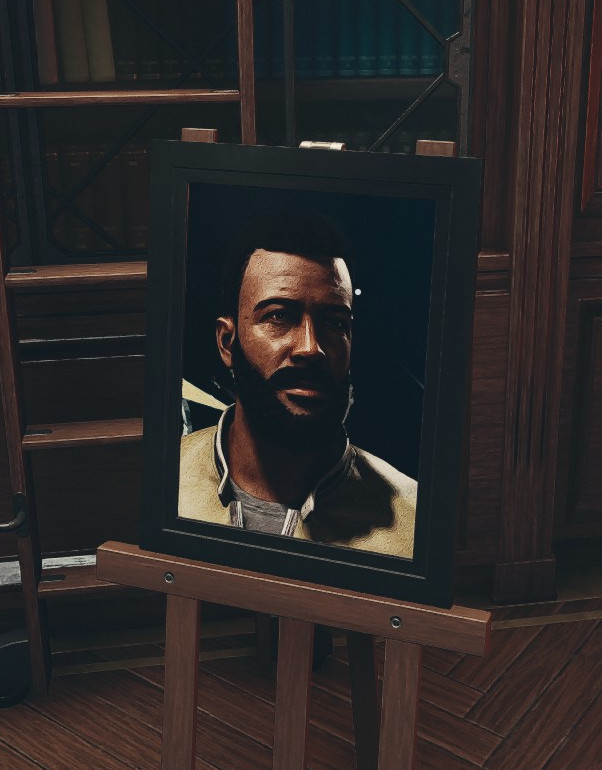
It was a sad moment, but that’s not what made me tear up. It was the ceremony held some time later, after the dust settled and the survivors healed their physical wounds. The voice actors were phenomenal in their delivery, feeling as if they were truly their characters, as real as I am and speaking about a dearly departed friend and colleague. A painting of Barrett was on display, featuring the ability for you to talk to it. It wasn’t able to respond; it was just an opportunity for you to speak to a lost soul as you might speak to a grave. In lieu of a eulogy, everyone was able to speak: the perspectives of divinity and humanism in the face of death displayed in monologues delivered by characters Matteo and Walter, respectively. It was truly touching, not over-acted or maudlin in presentation. What’s even more impressive is that as I’ve learned, it’s not the only outcome: if I had stayed to defend the Lodge, someone aboard the space station would have died. In a sense, I let Barrett die. The last words he and Starfield-me shared were me asking if I was making the right choice, and him telling me in no uncertain terms, no. Not because of the danger to him, but because of the danger to the mission we all signed up for. He was the root that lifted me off that first planet, and in losing him I, and the rest of Constellation were set on a path that granted us access to so much more. It wasn’t worth the cost. But, there was no taking back what was lost.
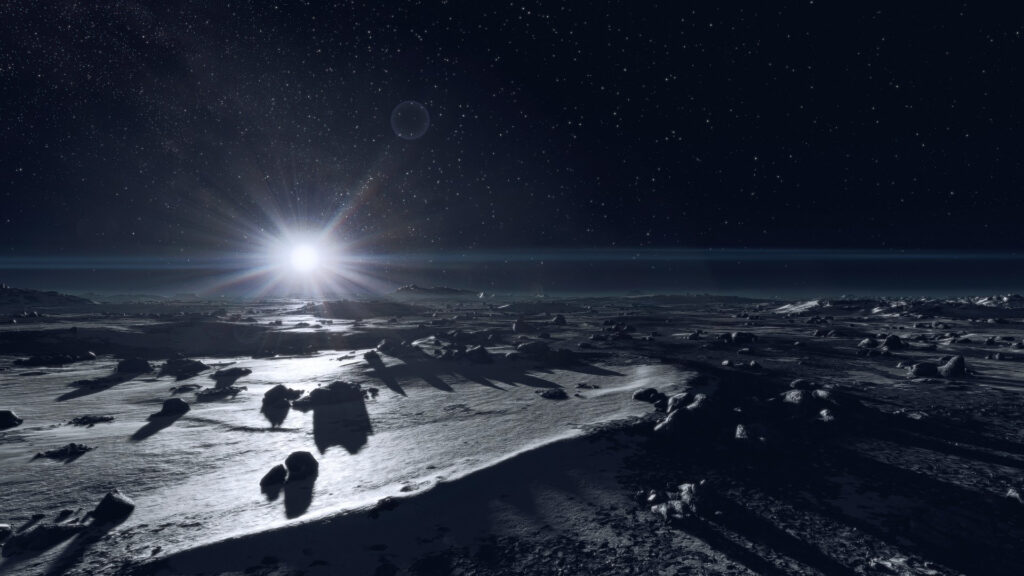
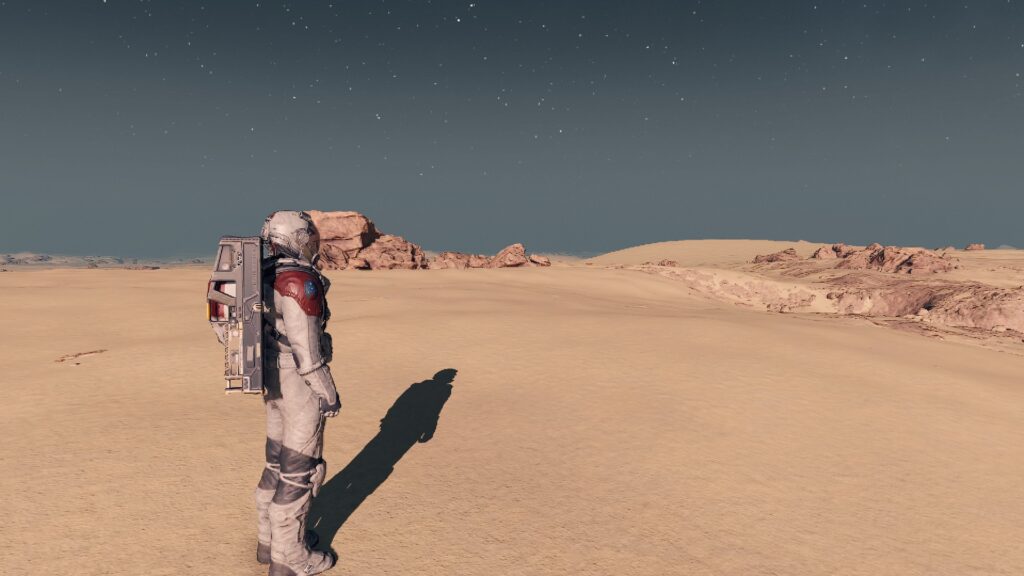
Beyond the writing and the gameplay, the visuals have their moment too. While I’m not a fan of the more cinematic approach they take to space—making it not pitch black but pale shades of blue, lit dramatically by the system’s star—I found their planets were, pardon the word, stellar. Procedurally generated they may be, but you can enjoy some wonderful vistas that evoke shades of what I imagine the true feeling of a human being with the fortune of being able to stand on a celestial body not our Earth must have experienced. While I’m afraid joining the company of Armstrong and Aldrin is out of my league, this is a fine stand-in.
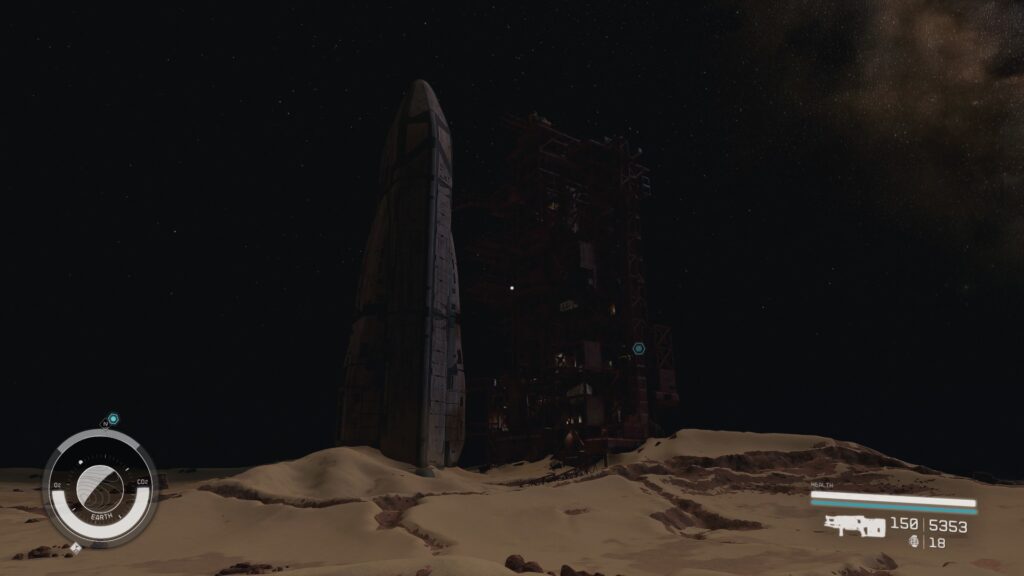
I’m still in the throes of Starfield mania, so this is probably more scattered and tangential than I’d like. The game isn’t without flaws; the planetary exploration is the epitome of ‘mile wide, inch deep’ and disappointingly, the number of landmarks amid the plains of procedurally generated Earth and Mars distinguishing them from the hundreds of other planets can be counted on both hands.
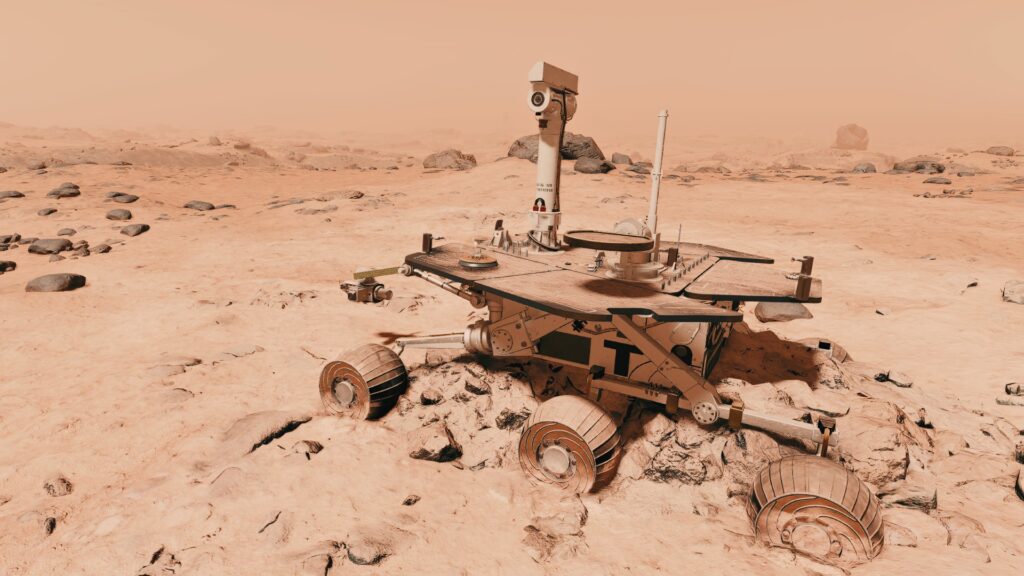
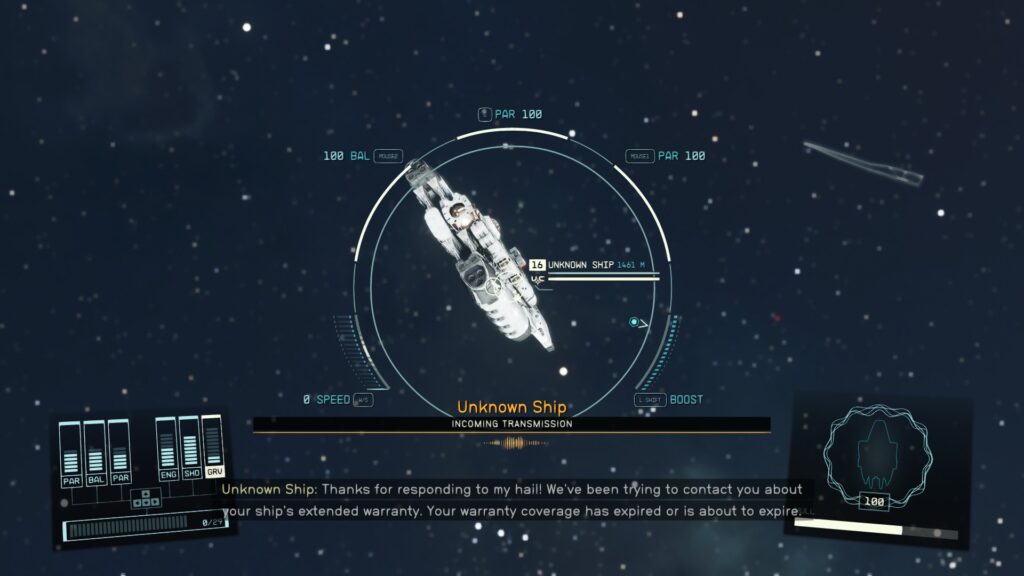
And while it’s remarkably close to bug-free for a Bethesda game at launch, there have been some annoying graphical glitches and NPC-related hilarity. And if I could count the number of times VASCO decided to plant himself directly in the middle of the Sonata’s bridge access…or that one time I was contacted about my ship’s warranty right as I was just starting an assault on a mercenary cruiser.
In the end though, it’s a game that has the most potential I’ve seen in some time. With future support from Bethesda and mods, it’ll be one of the greatest in the science fiction genre since Mass Effect or Halo. It has some heartfelt love letters to the concept of space as the final frontier, to NASA and their tireless pursuit of scientific advancement on and off of Earth, and the genre of science fiction as a whole—from the roots to recent developments. But it’s more than playable now, and if you’re like me: a diehard fan of science fiction that toys with the philosophical and tries to relate to reality as much as the story being told allows, who grew up on Asimov and a little too much time spent watching The Next Generation then give this game a try. If not for the entire Devil May Cry or Mass Effect series, I think this one might be in my #1 all-time spot.